
Commercial Roofing
Commercial roof inspections, replacements, hurricane wind-uplift assessments, and emergency response across Tampa - Downtown Riverwalk, Westshore, Channelside, Water Street, Ybor City, and TIA-adjacent industrial.
Tampa's commercial roof inventory was built in three distinct waves, each presenting different scope challenges today. The first wave - 1970s through mid-1980s downtown construction along the Franklin Street and Kennedy corridor - produced the office and mixed-use stock that is now in active second or third reroof cycles. The second wave - late 1980s through 2000s Westshore business district buildout along Kennedy Boulevard and the TIA-adjacent industrial and logistics ring - produced a large inventory of TPO and modified bitumen systems from that era that are at or past their original warranty life, driving the heaviest replacement demand in the market right now. The third wave - the Channelside, Water Street Tampa, and Ybor City redevelopment from the 2010s through the present - is in first maintenance cycles or approaching them.
Hurricane Milton's 2024 track across Hillsborough County reset the baseline for what Tampa commercial building owners understand about wind-uplift risk. Buildings that had been through one or two reroof cycles without HVHZ-engineered fastener patterns showed visible perimeter and corner zone stress after the storm, even where the membrane did not completely separate. Our inspection routes in the months after Milton documented this pattern across the Westshore corridor and the downtown office stock. That post-storm assessment work is now driving a wave of replacement and re-fastening projects that will run through the next several years.
Where We Run Tampa Routes
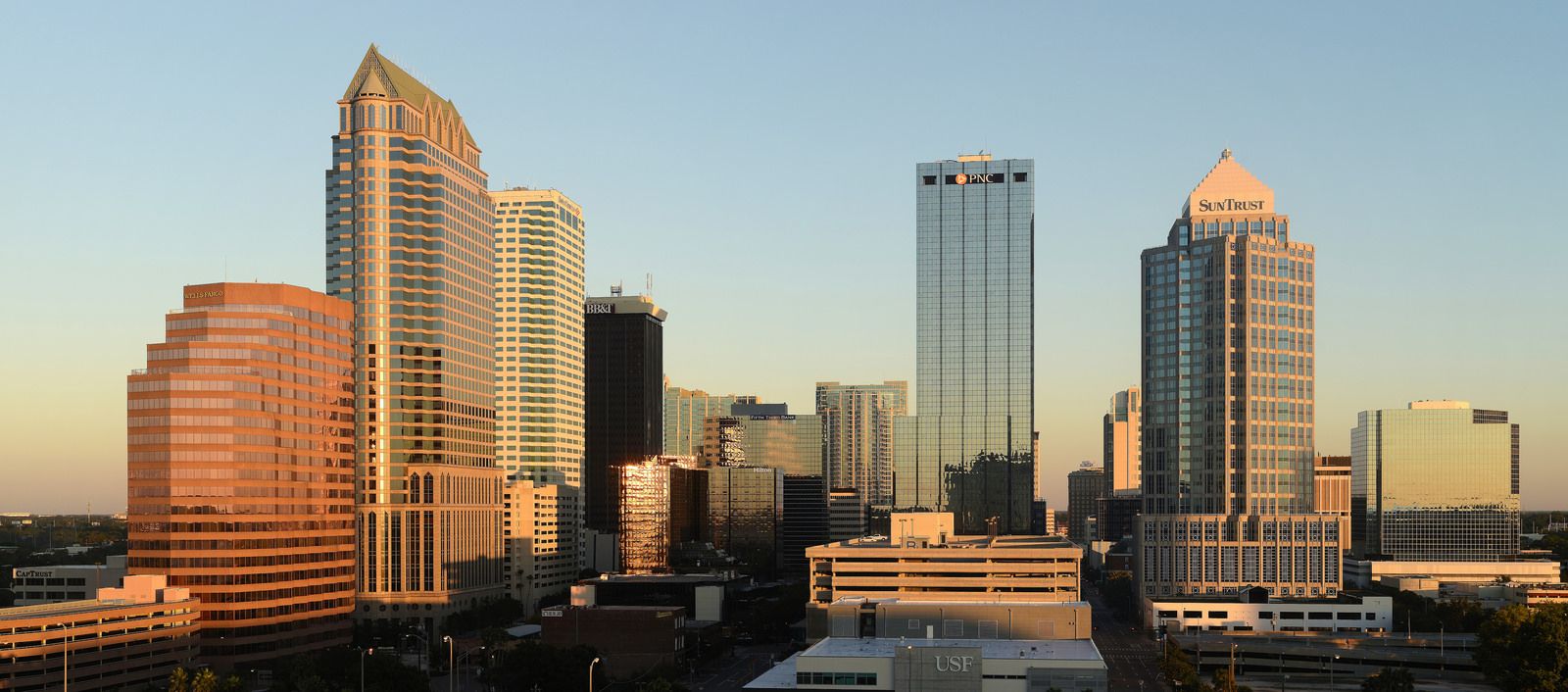
Downtown Tampa / Riverwalk / Channelside: The commercial core along the Hillsborough River waterfront - from the Tampa Convention Center north through Channelside Drive and the Water Street Tampa development - includes Class A office towers, the Amalie Arena event district, the Tampa Marriott Water Street, and the mixed-use commercial and residential towers of Water Street Tampa's 50-block redevelopment. Much of the Water Street inventory is new construction from 2018 onward, in first warranty maintenance cycles. The older Channelside warehouse conversion buildings present the custom-flashing challenges that come with irregular brick parapets and aged structural steel.
Westshore Business District: Tampa's primary Class A office concentration runs along Kennedy Boulevard and North Dale Mabry Highway between the TPA terminals and the Howard Frankland Bridge approach. The Westshore cluster - International Place, One Harbour Place, Highwoods Properties portfolio, and the surrounding B and C office inventory - represents the highest concentration of commercial roof demand in the Tampa metro. Most of the 1990s and 2000s office buildings in this corridor are running their first-generation or first-recover TPO systems at end of life. Many showed perimeter zone stress in the post-Milton assessment period.
Ybor City Historic District: The Ybor City commercial inventory is primarily 1890s through 1940s masonry construction - brick-faced commercial buildings with flat or low-slope roofs on timber or early steel joists. These buildings require custom flashing details that standard manufacturer details do not address: brick-to-membrane transitions, irregular parapet heights, and in some cases Florida Landmarks Commission design review for alterations to the building envelope. We have documented project experience on Ybor City commercial buildings and are familiar with the Landmarks Commission review process for roofing alterations.
Tampa International Airport Adjacent Industrial: The industrial and logistics ring surrounding TPA - concentrated along Spruce Street, Cypress Street, and the Airside Road corridors, and extending south through the Westshore industrial district to Port Tampa Bay - includes large-footprint warehouse and distribution buildings from the 1970s through the 2010s. Many of the older buildings in this corridor are on original BUR or early EPDM systems at or past replacement age. The newer 2000s and 2010s logistics buildings are in first maintenance cycles or approaching first reroof on their original 45-mil TPO systems.
Port Tampa Bay Logistics: The Port Tampa Bay commercial and industrial ring - Channelside Drive, Hookers Point terminal, and the Uceta Yard-adjacent industrial corridor - includes port infrastructure buildings, freight terminal facilities, and the container-adjacent warehouse and transload operations. Port facilities present specific access and scheduling requirements for roofing contractors. We are familiar with the port's contractor credentialing and site access protocols.
Tampa Climate and Hurricane History Context
Tampa Bay sits at the head of a funnel-shaped estuary that amplifies storm surge during Gulf hurricane landfall - the same geographic configuration that made the Tampa Bay area a consistent outlier in hurricane risk modeling for decades. Hurricane Milton's 2024 track across Hillsborough County, after a period of rapid intensification to Category 5 strength over the Gulf, and after the storm surge from Idalia's 2023 Big Bend landfall had already elevated insurance attention to the market, produced the first direct major hurricane impact on the Tampa Bay area in many decades.
The storm surge modeling from Milton's approach confirmed what the National Hurricane Center had been projecting for years: a direct hit on Tampa Bay at major hurricane intensity produces surge levels in the inner bay that affect commercial properties well inland of the waterfront. Buildings along the Hillsborough River downtown, in the Port Tampa Bay logistics district, and in the Westshore low-lying corridor are in surge projection zones for certain storm tracks. Our post-storm assessment protocol includes a check for evidence of inundation damage - waterlogged insulation from flooding rather than from roof leak - which requires a different remediation scope than standard water intrusion.
Tampa receives approximately 47 inches of rainfall annually, most of it between June and September in the afternoon sea-breeze convergence thunderstorm cycle. The city's position at the convergence of Tampa Bay and Gulf sea breezes makes afternoon storm development one of the most consistent in the southeastern United States. For roof replacement projects with a summer production window, this pattern requires daily weather monitoring and a production discipline around tear-off section sizes that we treat as non-negotiable.
Roof review
Get a written Tampa Bay commercial roof scope.
We document the roof condition, separate urgent repairs from capital work, and give ownership a practical path before money gets spent.