Built-Up Roofing Tampa Bay
Built-up roofing assessment and replacement for Tampa Bay commercial buildings - existing BUR inventory evaluation, gravel-surface and cap-sheet systems, FBC HVHZ compliance on replacement, salt-air deck corrosion documentation.
Tampa Bay's older commercial building inventory - the 1960s through 1980s office and industrial stock across Downtown, Port Tampa Bay, Pinellas Park, and the TIA ring - carries a substantial built-up roof (BUR) inventory that is past its design life and actively driving replacement decisions. We assess existing BUR systems and scope replacement with current FBC HVHZ compliant assemblies.
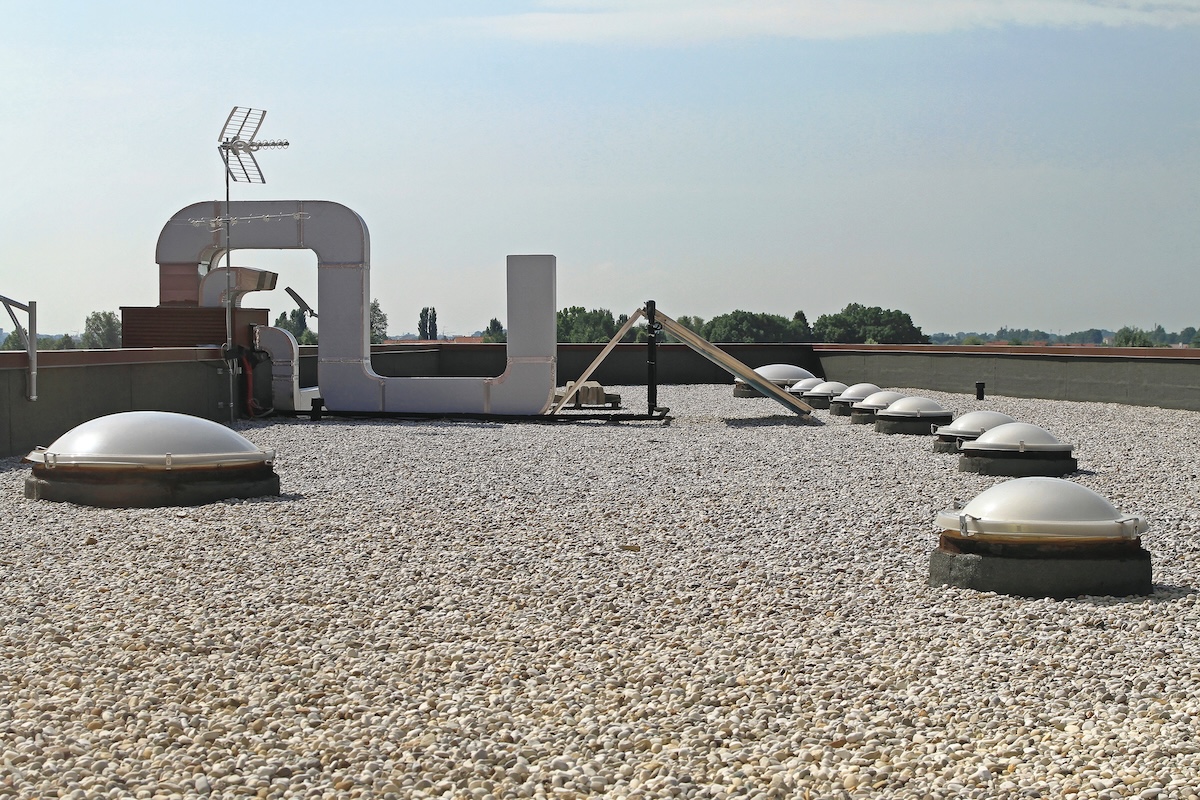
Built-up roofing - multiple plies of reinforcing felt embedded in hot asphalt and finished with a flood coat and gravel, or with a mineral-granule cap sheet - was the standard commercial flat-roof system in Tampa Bay from the 1950s through the mid-1980s. The commercial buildings that make up the older Hillsborough and Pinellas inventory - downtown Tampa office buildings along the Franklin Street corridor, Port Tampa Bay freight terminal facilities, the Pinellas Park industrial buildings along 34th Street, and the older TIA-adjacent logistics buildings - were built with BUR systems that were at or past their designed service life before Hurricane Milton ever crossed the Gulf.
BUR systems in Tampa Bay's subtropical climate age in ways specific to this market. The coal-tar or asphalt flood coat that binds the aggregate surface develops alligatoring - surface cracking in a pattern resembling alligator skin - from the sustained UV load and thermal cycling of Tampa Bay's climate. The alligatored surface is not necessarily actively leaking, but it is no longer a sealed water-resistant surface; it is a degraded surface with cracks that allow water into the membrane plies below during Tampa Bay's high-intensity rainfall events. Once water enters the plies, the heat-softening of the asphalt binder during Tampa Bay's summer months can allow the saturated plies to delaminate from each other under wind loading.
Our BUR assessment protocol for Tampa Bay buildings starts with the surface condition - alligatoring depth and extent, aggregate loss, surface crack pattern - then moves to core samples for moisture and ply condition. In the Tampa Bay coastal salt-air environment, the BUR core also checks for deck condition at the core location. Metal deck in buildings with saturated BUR in a coastal salt-air zone corrodes faster than in non-coastal markets, and the corrosion can progress to structural concern without any visible indication from the roof surface.
Existing BUR Inventory - When Replacement Cannot Wait
The decision rule for BUR replacement versus recovery is more constrained than for single-ply systems. Florida Building Code limits recover over existing BUR to one additional recover layer before the system must be torn off to the deck. Many Tampa Bay BUR buildings have already been through one recover - a TPO or modified bitumen system installed over the original BUR in the 1995 through 2010 window - and are at the point where the next work must be a full tear-off. The tear-off scope reveals deck condition that cannot be assessed without removing the existing assembly.
BUR systems on buildings within two to three miles of Tampa Bay or the Gulf present a specific deck assessment challenge. The asphalt flood coat in original BUR systems is not a vapor-tight membrane at the deck interface - it allows vapor migration from the interior conditioned space into the insulation above the deck over decades of operation. In Tampa Bay's humid subtropical climate, interior humidity levels are high year-round, and the vapor drive through the deck interface is sustained. Buildings in this condition show insulation saturation that is dry-side driven - coming from below rather than from above - and the deck corrosion pattern is different from standard leak-driven saturation.
After Hurricane Milton, we assessed several downtown Tampa and Ybor City commercial buildings with original BUR systems where the membrane had survived the wind event without visible separation but showed post-storm infrared scanning evidence of new saturation at the edges - the perimeter zone where wind uplift had worked the membrane edges away from the parapet briefly during the storm, allowing water intrusion from the wind-driven rain. This pattern is common in aged BUR systems after hurricane events: the membrane integrity appears intact from the surface, but the storm created new ingress points at the most vulnerable edge zones.
BUR Tear-Off and Deck Inspection Protocol
BUR tear-off in Tampa Bay requires the same afternoon-thunderstorm discipline as any open-deck roofing work: sections sized to what the crew can dry-in the same day, daily National Weather Service forecast review, and a stop-work protocol for days where the afternoon convective outlook is high. The added complexity with BUR tear-off is the hot-asphalt debris management - BUR systems with coal-tar bitumen generate material classified as hazardous waste under some disposal protocols, and the disposal pathway is different from standard construction debris. We identify the bitumen type during pre-construction assessment and specify the disposal pathway in the pre-construction documentation.
Deck inspection after BUR tear-off in a coastal Tampa Bay building regularly produces findings that could not be detected from the roof surface before tear-off. Surface corrosion on metal deck flanges in the salt-air zone is visible from the deck soffit, but the top flange corrosion under the BUR is only visible after tear-off. Buildings in Ybor City with timber joist decks sometimes reveal rot at the joist tops - not visible from below and not visible through the BUR from above - that requires joist repair before the new roof can be installed. We budget a deck contingency in every BUR replacement scope and document the deck condition findings in the tear-off inspection report.
The replacement specification after BUR tear-off follows the same FBC HVHZ compliance path as any new commercial roof: Miami-Dade NOA-approved assembly selection, ASCE 7 wind-uplift calculation for the building's exposure and zone, zone-differentiated fastener pattern, and coastal hardware specification. The closeout package from the BUR replacement includes the NOA number, the zone diagram, the deck condition inspection record from tear-off, and the manufacturer warranty document.
Roof review
Get a written Tampa Bay commercial roof scope.
We document the roof condition, separate urgent repairs from capital work, and give ownership a practical path before money gets spent.