
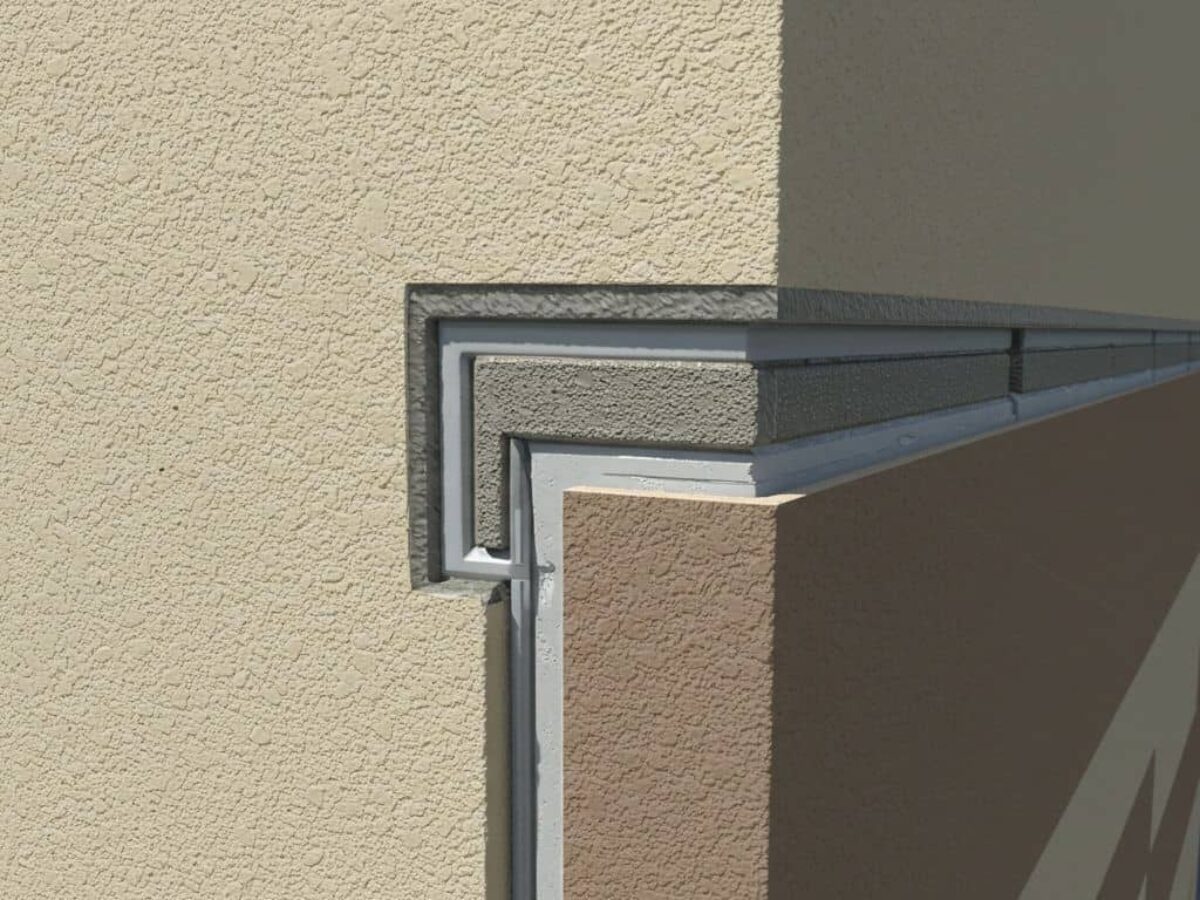
Expansion Joint Repair
Commercial roof expansion joint repair in Tampa - cover assemblies, bellows replacement, membrane bridge repair, and watertight expansion joint restoration for large-footprint flat-roof commercial buildings across Hillsborough and Pinellas Counties.
Large-footprint commercial buildings in Tampa Bay move - thermal expansion and contraction in a climate that swings 90 degrees on a roof surface between summer afternoon and winter morning is relentless, and the expansion joints that accommodate that movement are among the first roof components to fail when maintenance is deferred. Failed expansion joints produce leaks that are among the most difficult to trace and the most expensive to remediate if left unaddressed.
Expansion joints on commercial flat roofs exist to accommodate the thermal movement of large building structures without transmitting that movement as stress into the waterproofing membrane. Tampa Bay's subtropical climate produces thermal cycling loads on large-footprint commercial buildings that are more severe than most other commercial roofing markets because of the combination of high summer roof surface temperatures - 160 to 180 degrees Fahrenheit on a dark membrane on a Tampa August afternoon - and the significant overnight temperature drop that follows. On a 300-foot building dimension, a 70-degree Fahrenheit surface temperature change produces approximately 0.4 inches of linear thermal movement - enough movement to fatigue a non-compliant waterproofing detail within three to five years.
The expansion joints we repair on Tampa Bay commercial buildings fall into two types: structural building expansion joints, which accommodate movement between independent structural sections of a large building and are the widest joints (typically 2 inches or more) with the highest movement demand; and roof expansion joints, which are installed in large membrane fields at intervals of approximately 100 to 150 feet to relieve thermal stress in the membrane itself and are typically narrower joints with a cover assembly.
Both types fail in the same fundamental way in Tampa Bay's climate: the elastomeric or thermoplastic cover assembly, bellows, or membrane bridge that spans the joint loses its elasticity under repeated thermal cycling and UV exposure, becomes brittle, and cracks or separates at the point of maximum movement. The failure produces a direct water entry path into the structural joint gap - a path that leads directly into the building interior in most large commercial building configurations because the expansion joint runs through the full depth of the roof assembly and, in structural joints, through the building floor system.
How Tampa Bay's Climate Stresses Expansion Joints
Tampa Bay's expansion joint failure rate is driven by the combination of thermal amplitude and UV irradiance. The UV environment in Tampa Bay is among the most intense in the continental United States - the subtropical latitude, the high humidity that amplifies diffuse UV, and the long annual sun exposure hours produce outdoor UV dosage rates that degrade elastomeric expansion joint covers significantly faster than in northern climates. An EPDM expansion joint bellows rated for 20 years of service in a northern climate may achieve 12 to 15 years in Tampa Bay conditions because the UV degradation of the rubber compound proceeds at a faster rate.
The salt-air environment compounds the UV issue for buildings within two to three miles of Tampa Bay and the Gulf. Salt deposition on the expansion joint cover surface accelerates oxidation of the rubber or thermoplastic compound, and the chloride ions in the salt-air environment attack the metal flanges and fasteners used to secure the cover assembly to the roof substrate. Buildings in the Channelside and Harbour Island commercial districts, the downtown Tampa Riverwalk corridor, and the Westshore waterfront show accelerated expansion joint cover degradation relative to inland Hillsborough buildings at similar ages.
Hurricane events produce a specific expansion joint stress mode that differs from the standard thermal cycling fatigue pattern. When a hurricane produces building racking - lateral deformation of the building structure under wind load - the structural expansion joints accommodate that racking movement on top of the normal thermal movement. The combined demand can exceed the design range of the expansion joint cover assembly, particularly on older covers that have already lost some of their elastic range through UV degradation. Post-hurricane expansion joint assessment on Tampa Bay commercial buildings should specifically check for cover assemblies that have been extended beyond their elastic limit - visible as permanent deformation, set in the bellows, or tearing at the flange terminations.
Cover Assembly Replacement - Materials and Methods for Tampa Bay
Expansion joint cover assemblies for commercial flat roofs come in several configurations, and the right choice for a Tampa Bay building depends on joint width, movement demand, and the surrounding membrane system type. The most common cover assemblies we install on Tampa Bay commercial buildings are: factory-formed EPDM or TPO bellows with aluminum flanges for structural joints with movement demands above 1 inch; pre-formed neoprene compression seals for expansion joints with movement demands up to 3/4 inch; and membrane bridge covers - strips of self-adhered modified bitumen or fully adhered TPO spanning the joint with a slip sheet at the joint center - for smaller-movement roof expansion joints.
For buildings in the HVHZ coastal exposure zone, the expansion joint cover assembly must be able to accommodate the lateral wind-racking movement produced by hurricane-force winds on top of the standard thermal movement. We specify cover assemblies with a rated movement range 20 to 30 percent above the calculated thermal movement demand for coastal exposure zone buildings, to provide the margin for wind-racking loading without exhausting the assembly's elastic capacity.
Flange fasteners for expansion joint covers in the coastal salt-air exposure zone are specified in stainless steel, not galvanized or aluminum - the same fastener specification that applies to other metal components within two to three miles of Tampa Bay or the Gulf. Galvanized expansion joint flange fasteners on coastal buildings typically begin showing corrosion within three to five years, and the corrosion at the fastener penetration through the membrane creates a leak path independent of the joint cover condition.
Roof review
Get a written Tampa Bay commercial roof scope.
We document the roof condition, separate urgent repairs from capital work, and give ownership a practical path before money gets spent.