
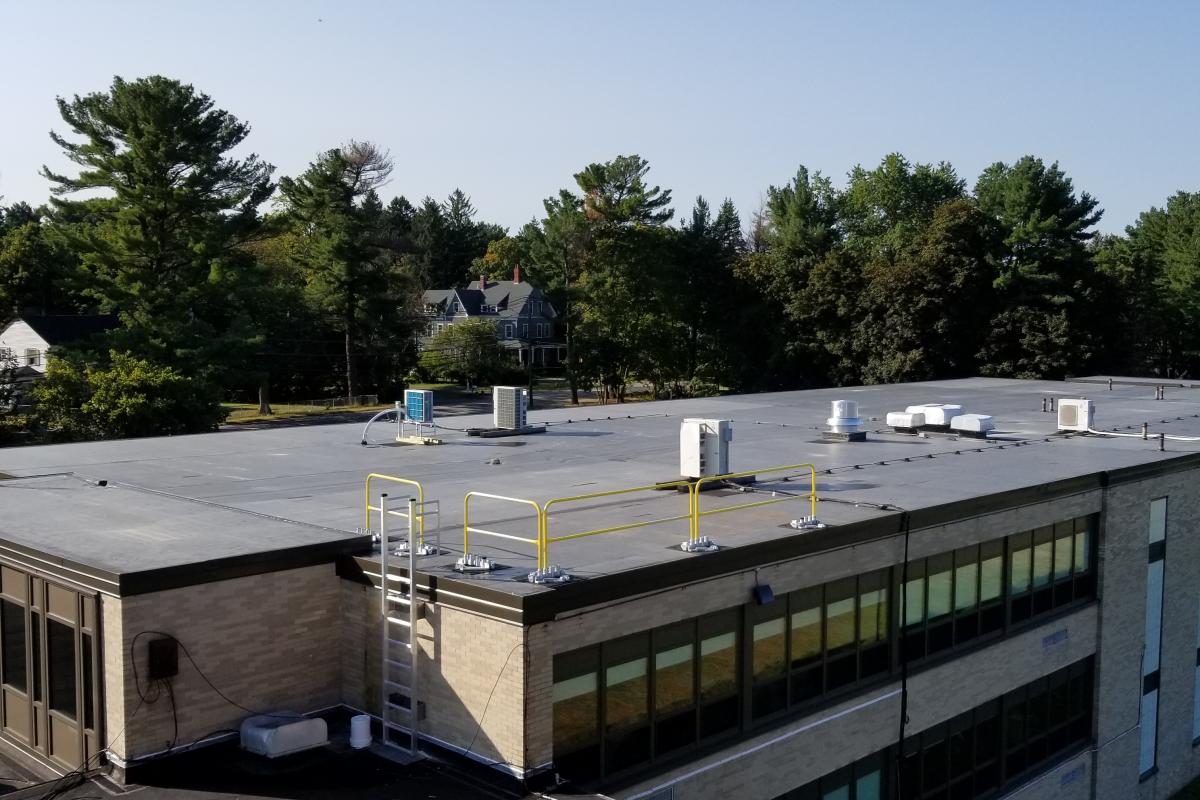
Government and Municipal Building Roofing
Commercial roofing for city halls, courthouses, fire stations, police stations, and public facilities throughout Tampa, FL.
Tampa's municipal and county government buildings span a remarkable range of ages and functions - from the ornate to modern fire stations engineered to post-Hurricane Andrew wind standards, from the Tampa Convention Center's vast low-slope roof along the Hillsborough River to branch libraries serving neighborhoods across Florida's third-largest city. What unites these structures is their exposure to one of the most demanding roofing climates on the continent: intense solar radiation year-round, daily afternoon thunderstorms during a six-month wet season, and a documented history of direct hurricane impacts that has reshaped how Hillsborough County and the City of Tampa specify and procure roofing systems for public assets.
Government roofing procurement in Tampa moves through two parallel channels. The City of Tampa Procurement Services Division manages solicitations for city-owned facilities, posting bids on Bonfire and advertising in the Tampa Bay Times legal notices. Hillsborough County Procurement Services handles county facilities, operating through its own vendor portal and the Hillsborough County Clerk's public notice system. Both agencies apply Florida Statute Chapter 255 requirements to state-funded construction contracts, and public works bid openings are conducted in accordance with Florida's sunshine law - attended by any interested party. Contractors new to the Tampa government market should register as vendors with both entities to receive bid notifications for their service categories.
Florida Building Code wind uplift requirements are the central technical challenge for Tampa government roofing. While Tampa is not within the HVHZ zone applicable to Broward and Miami-Dade, Hillsborough County's coastal exposure places many essential facilities in design wind speed categories that require high-performance roofing assemblies. The county's emergency management facilities, police district offices, and fire stations along the waterfront and low-elevation zones are assigned Exposure Category D under ASCE 7, demanding roofing systems with tested wind uplift resistance verified by Florida Product Approval numbers. Tampa Bay Area inspectors enforce these requirements stringently, and products without valid Florida Product Approval are rejected at permit review.
Solar heat gain is the dominant energy concern for Tampa public buildings. Rooftop surface temperatures on unshaded flat roofs in Tampa reach 165 to 170 degrees Fahrenheit during summer afternoons, driving cooling loads that dominate municipal utility budgets. The Florida Energy Code requires minimum solar reflectance index values on low-slope roofs for conditioned spaces, and the City of Tampa's own sustainability commitment - expressed in its Resilient Tampa plan - pushes specifications toward cool-roof products that exceed the code minimum. For large facilities like the Tampa Convention Center and Hillsborough County Center, the energy cost differential between a standard and a high-reflectance membrane can represent tens of thousands of dollars annually in cooling savings.
Hurricane preparedness has directly shaped Tampa's approach to government building roofing specifications. Following the lessons of Hurricanes Irma, Ian, and other Gulf-intensifying storms that have threatened the Tampa Bay area, Hillsborough County's Facilities Management department updated its roofing specification standards to require enhanced attachment of insulation boards, mechanically fastened perimeter securement, and concrete-embedded parapet anchors on re-roofing projects for essential facilities. Contractors must demonstrate familiarity with these enhanced specifications, which exceed the minimum code requirements, and must use products and installation methods that comply with the manufacturer's assembly for the enhanced wind resistance category.
Prevailing wage requirements in the Tampa market, as across Florida, apply primarily to federally funded projects. Hillsborough County has received substantial federal FEMA mitigation grants for facility hardening after hurricane declarations, and roofing projects funded through these grants require Davis-Bacon Act compliance. The Tampa district office of the Department of Housing and Urban Development monitors Davis-Bacon compliance on CDBG-funded community development projects that occasionally include public facility roofing. Weekly certified payrolls, on-site labor interviews, and wage determination postings are standard requirements on these federally assisted contracts, and Hillsborough County grant administrators conduct compliance reviews throughout project execution.
The historic Hillsborough County Courthouse, built in 1952 and expanded over subsequent decades, presents roofing challenges that go beyond standard commercial practice. The building's multiple roof levels, numerous mechanical penetrations, and monumental exterior detailing require careful coordination with the county's facilities team and, where applicable, the State Historic Preservation Officer. While the building is not formally listed on the National Register, it carries sufficient architectural significance that county staff have approached past re-roofing projects conservatively, maintaining original parapet profiles and avoiding visible changes to the courthouse's character. Contractors should expect detailed pre-construction meetings and shop drawing review processes on any scope touching the courthouse exterior.
Bonding requirements for Tampa municipal and county roofing projects follow Florida Statute 255.05, requiring performance and payment bonds recorded with the Hillsborough County Clerk of Court for public contracts above the threshold. The recorded payment bond is the exclusive remedy for roofing subcontractors and material suppliers on public property in Florida, since mechanics' liens cannot attach to government-owned buildings. Roofing subcontractors should verify that a 255.05 bond has been recorded before commencing work, particularly on larger general construction contracts where roofing is a subcontract scope managed by a construction manager at-risk or design-build prime.
Tampa's active development environment means government facility construction is continuous, with Hillsborough County's Capital Improvement Program and the City of Tampa's budget regularly funding new civic buildings, fire station replacements, and library renovations. The Hillsborough County CIP is adopted by the Board of County Commissioners each fall and identifies roofing and building envelope projects by facility name, estimated cost, and planned fiscal year. Roofing contractors who engage with the CIP process, attend county budget workshops, and maintain vendor registration with both Tampa and Hillsborough County procurement offices position themselves ahead of the competitive field for emerging government roofing opportunities in this rapidly expanding market.
Frequently asked questions
How do I know if my Tampa commercial building's BUR system needs replacement or repair?
Roof review
Get a written Tampa Bay commercial roof scope.
We document the roof condition, separate urgent repairs from capital work, and give ownership a practical path before money gets spent.