
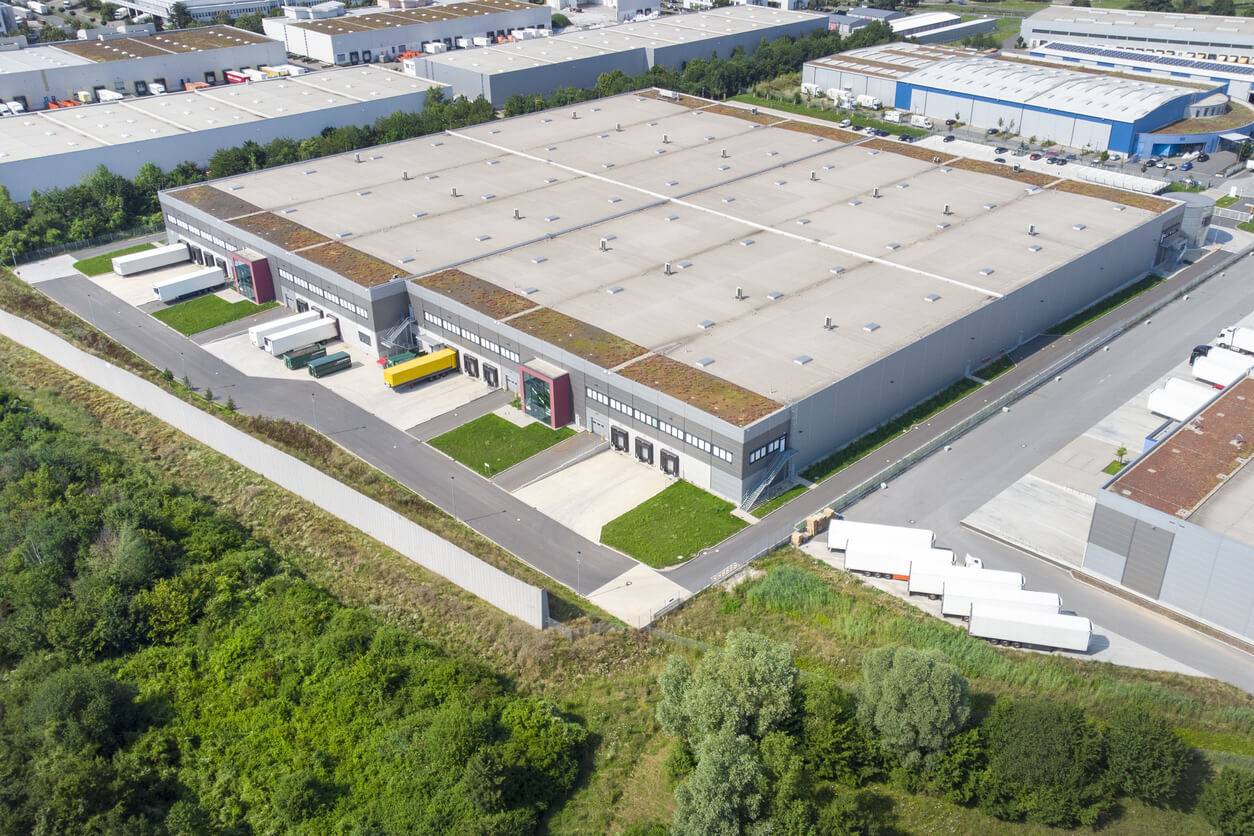
Industrial Roofing
Industrial Roofing for manufacturing facilities, warehouses, and industrial buildings throughout Tampa Bay.
Tampa Bay is Florida's industrial powerhouse. Port Tampa Bay is the largest port in Florida by tonnage and the largest port on the Gulf of Mexico, moving phosphate, petroleum, dry bulk, containers, and vehicles across a sprawling waterfront industrial complex. Tampa International Airport anchors a cargo and logistics cluster that feeds the regional distribution economy. The I-4/I-75/I-275 interchange - sometimes called the "spaghetti junction" of Central Florida - is ringed by industrial parks, cold storage facilities, logistics centers, and manufacturing operations that take advantage of Tampa's position at the crossroads of Florida's two major freight arteries. Ybor City's historic industrial buildings add a preservation-complexity layer. Mosaic's phosphate industrial operations stretch from port to processing. This is a market where industrial roofing stakes are high and climate challenges are relentless.
Tampa's hurricane exposure has moved from theoretical to proven in recent years. Hurricane Idalia struck in August 2023, and Hurricane Milton made a direct major Tampa Bay landfall in October 2024 - the most significant direct hit the region had seen in generations. The combination of storm surge, high winds, and wind-driven rain in Milton-scale events tests every element of a commercial or industrial roof system simultaneously. Perimeter edge metal must resist uplift forces that can exceed design loads on buildings using outdated specifications. Seam adhesion must hold under sustained winds with directional shifts. Drain systems must handle rainfall rates that overwhelm standard drainage calculations. The post-Milton landscape in Tampa's industrial zones includes many facilities that learned expensive lessons about deferred maintenance and under-specified roofing systems.
Salt air from Tampa Bay and the Gulf of Mexico is a persistent, year-round threat to industrial roof components. Corrosive marine-grade exposure affects fasteners, expansion joint covers, curb flashings, metal edge profiles, and any exposed metallic surface on a Tampa industrial roof. Aluminum and galvanized steel components that perform reliably in inland environments have shortened service lives here. Contractors who specify for Tampa's industrial coastal environment use coated or stainless fasteners, sealed metal laps, and marine-grade edge components - details that cost more upfront but prevent the kind of metal deterioration that compromises otherwise-sound membrane systems.
Port Tampa Bay facilities face roofing conditions that combine the marine exposure of coastal industrial operations with the structural demands of heavy industrial use. Covered bulk storage facilities, warehouse sheds over active cargo operations, and processing buildings near the phosphate terminals all experience vibration loads from heavy equipment, chemical exposure from dusty cargo residues, and the constant moisture cycling of a waterfront location. TPO single-ply systems in this environment require membrane formulations that resist chemical attack and UV degradation simultaneously. Cover boards under the membrane provide additional protection against mechanical damage from maintenance foot traffic.
Forty-six inches of annual rainfall distributed across Tampa's summer-dominant wet season creates intense short-duration rain events. A two-inch-per-hour rainfall rate is not unusual during afternoon convective storms in June through September, and a 300,000-square-foot industrial roof in that rain event is generating enormous volumes of water that must be moved off the building quickly. Undersized or clogged drains and scuppers on large flat industrial roofs create ponding that can exceed the structural load design of the deck and membrane. Drain maintenance is not a nice-to-have in Tampa's industrial climate - it is a safety and liability requirement.
The I-4/I-75 industrial corridor includes some of the largest distribution centers in the Southeast, several exceeding 500,000 square feet under a single roof. Buildings of this scale require roofing systems and installation contractors with the logistical capacity to manage large-format projects. Seam placement on a half-million-square-foot TPO system must account for thermal expansion across the full roof plane. Attachment patterns must meet the uplift requirements of the Florida Building Code, which in Tampa's wind zone are among the most demanding in the continental United States. Only contractors with documented experience on large-footprint Florida commercial and industrial roofing should be entrusted with these installations.
Ybor City's historic industrial building stock presents a different set of challenges. Many structures in this district were built in the late 19th and early 20th centuries with wood decks, older brick parapet walls, and roofing systems that have been layered and re-layered over decades. A historic industrial building in Ybor City may have three or more roofing layers, with the uppermost system hiding serious deterioration below. Any reroofing project in this district requires a thorough assessment of existing layer conditions, a teardown-versus-overlay analysis, and coordination with local historic preservation guidelines where applicable. Substrate condition drives the choice of new roofing system for these buildings more than any other factor.
Mosaic and the broader phosphate industry support facilities in the Tampa region introduce chemical exposure considerations that go beyond typical industrial roofing. Acidic dust, chemical storage proximity, and industrial process vapor create roof membrane degradation pathways that standard TPO and modified bitumen systems may not handle optimally without additional protection. Facilities in or adjacent to phosphate processing operations should specify membrane systems with chemical resistance ratings, verify that primer and adhesive compatibility with potential chemical exposure, and increase inspection frequency to catch early signs of chemical attack on the membrane surface.
Post-hurricane inspection and recovery work in Tampa requires contractors who understand emergency tarping protocols, who have the manpower to respond across multiple facilities simultaneously, and who carry adequate insurance to work on damage claims alongside property insurers. After Milton's 2024 landfall, the demand for qualified commercial roofing contractors in Tampa Bay far exceeded available supply for months. Industrial facility managers with established relationships with a commercial roofing contractor - ideally under a preventive maintenance agreement - were prioritized over those calling cold after the storm. Building that relationship before the next event is the most practical risk management step available.
Our team has served Tampa Bay's industrial and commercial roofing market through multiple storm seasons, major port-zone projects, and the post-hurricane recovery work that comes with being in Florida's most hurricane-exposed gulf coast metro. We understand the wind zone requirements, the marine exposure conditions, the drainage demands of Tampa's rainfall, and the permitting environment. Contact us to schedule a professional assessment of your Tampa industrial facility's roofing system.
Questions Owners Ask
Roof review
Get a written Tampa Bay commercial roof scope.
We document the roof condition, separate urgent repairs from capital work, and give ownership a practical path before money gets spent.