
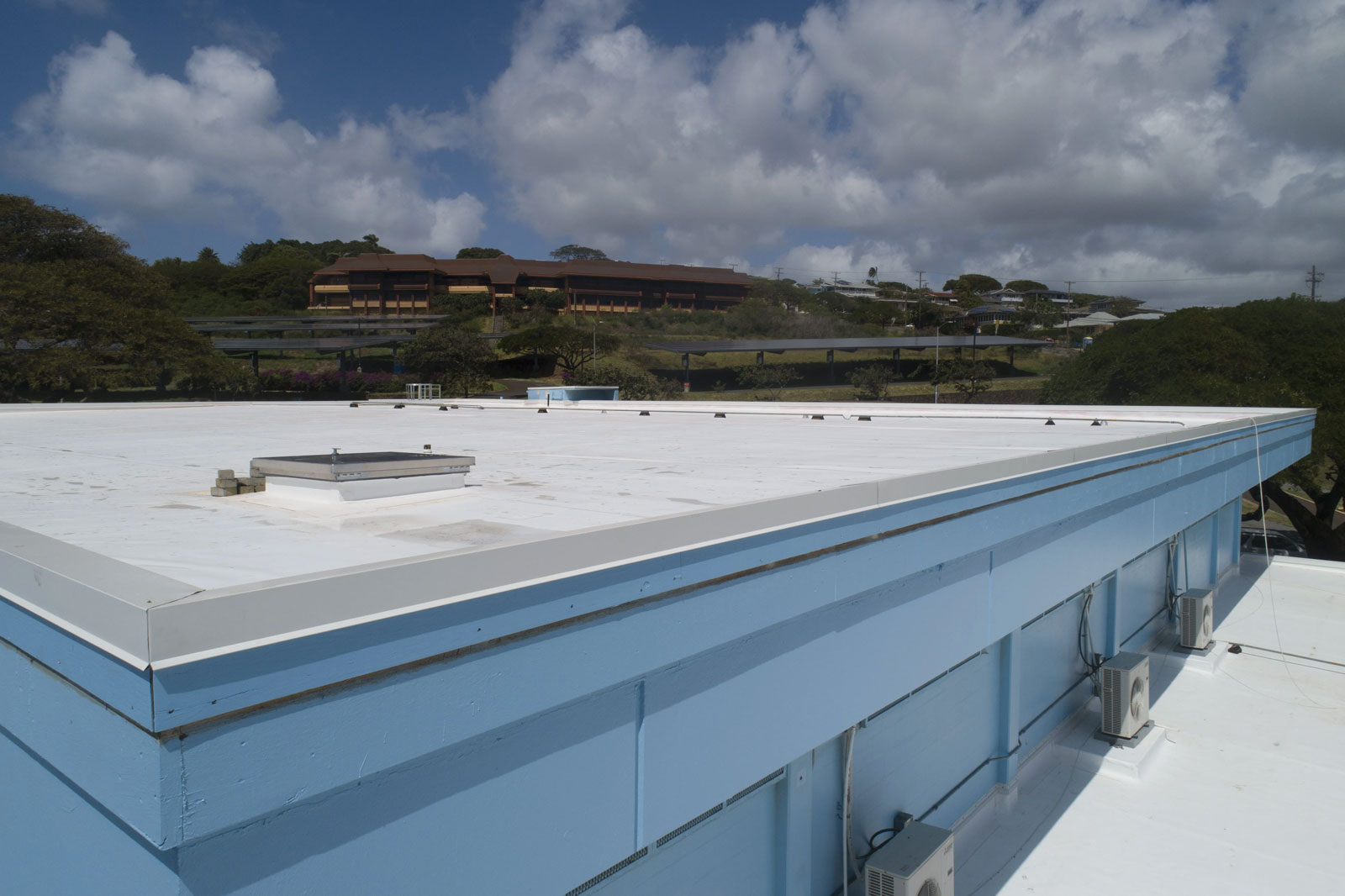
PVC Roofing
PVC commercial roofing for Tampa Bay flat and low-slope buildings - chemical resistance, hot-air-welded seams, Miami-Dade NOA approval, FBC HVHZ compliance, and salt-air-rated installation details.
PVC single-ply commercial roofing systems for Tampa Bay buildings where chemical resistance, welded-seam durability, and long-service-life matter - restaurant grease exhaust corridors, healthcare and laboratory buildings, Channelside hospitality properties, and coastal HVHZ exposure sites.
PVC - polyvinyl chloride - roofing membrane is the specification for commercial buildings where the roof is exposed to chemicals, grease-laden exhaust, or other membrane-aggressive substances that degrade TPO and EPDM at an accelerated rate. In Tampa Bay, this makes PVC the specification of choice for two specific building types: restaurant and food service facilities across the Ybor City dining corridor, Channelside, Water Street Tampa's restaurant district, and the Brandon commercial suburban strip; and healthcare, laboratory, and pharmaceutical facilities where roof membrane chemical compatibility is specified in the building's operational documentation. PVC's inherent resistance to oils, fats, and most common commercial chemicals makes it the correct membrane for these applications - not a premium upsell.
PVC also carries a weldable seam advantage over EPDM that is significant in Tampa Bay's high-humidity installation environment. PVC seams are hot-air welded - the membrane surfaces are fused with heat rather than bonded with adhesive - which produces a seam that is mechanically as strong as the membrane body itself. In Tampa Bay's high-humidity June-through-September installation season, hot-air welded PVC seams are more reliable than adhesive-bonded EPDM seams because they do not depend on adhesive cure conditions. A properly welded PVC seam cannot delaminate in high humidity; an improperly cured EPDM splice tape seam can and does.
Hurricane Milton's 2024 post-storm assessment work across the Tampa Bay commercial market included several PVC-covered buildings in the Ybor City historic district and the Channelside hospitality corridor. PVC fully adhered over nailbase insulation on these older masonry buildings performed as expected - intact membrane field with no seam delamination. The failure mode on the PVC buildings that showed storm damage was at the parapet flashing transitions, where the original installation had used standard aluminum termination bar that had corroded at the cut edge and allowed wind-driven rain to infiltrate behind the flashing. Salt-air corrosion at the termination bar, not membrane or seam failure, was the failure point on every PVC-covered building that showed storm infiltration.
When PVC Is the Right Specification
Ybor City restaurant and entertainment buildings: The Ybor City Historic District is the highest concentration of restaurant, bar, and entertainment rooftops in the Tampa Bay commercial market, and the Ybor City dining corridor - Seventh Avenue and the surrounding blocks - runs commercial kitchen exhaust through rooftop grease duct terminations that deposit grease on the membrane surface within a few feet of the exhaust stack. Grease degrades TPO and EPDM over time through plasticizer extraction and membrane softening. PVC's chemical resistance to petroleum-based grease makes it the correct specification for these buildings. We document the grease duct locations during inspection and size the PVC membrane specification to extend at least 6 feet from each exhaust termination in all directions.
Channelside and Water Street Tampa hospitality: The Amalie Arena event district, Tampa Marriott Water Street, and the surrounding Channelside and Water Street Tampa restaurant and hospitality properties combine high-traffic rooftop operations with salt-air exposure. PVC performs in both conditions - chemical resistance handles the kitchen exhaust and rooftop event activity, and PVC's UV stability in the Tampa Bay solar environment is comparable to TPO. For Water Street Tampa new construction, PVC is a common specification given the district's high-end finish requirements and the salt-air exposure of buildings fronting the Hillsborough River.
Healthcare and laboratory facilities: Tampa General Hospital's Davis Islands campus, the USF Health South Tampa campus, BayCare's hospital facilities across Hillsborough County, and AdventHealth Tampa all include laboratory and procedure areas where roof membrane chemical compatibility is a documented specification requirement. PVC's chemical resistance profile covers the common pharmaceutical and laboratory chemicals that might be stored or vented through roof-level equipment. We provide the membrane's chemical compatibility documentation as part of the project specification for healthcare facility projects.
Hot-Air Welded PVC Seam Protocol for Tampa Bay Humidity
PVC hot-air welding requires a specific temperature range at the weld point - typically 900 to 1,050 degrees Fahrenheit at the nozzle, calibrated against the specific membrane formulation being welded. In Tampa Bay's high-humidity installation environment, the ambient conditions affect the cool-down rate of the weld and the adhesion of the welded zone before it has fully cured. We calibrate our welding equipment to the membrane manufacturer's humidity-adjusted specifications and run test welds at the beginning of each production day when ambient humidity exceeds 70 percent.
Seam quality control on Tampa Bay PVC installations includes probe testing of every field seam within 24 hours of welding. Probe testing detects incompletely fused seam areas before they are covered by subsequent membrane laps. Failed probe locations are re-welded and re-probed before the installation proceeds. Probe test records and seam layout documentation are included in the project closeout package.
PVC T-joint detail at membrane corners - where three layers of membrane overlap at a seam intersection - is the highest-risk detail in a PVC installation and the most common location for post-storm infiltration where the installation was not performed correctly. We apply a PVC-compatible T-joint patch at every seam intersection, probe-test each patch, and photograph each T-joint as part of the closeout documentation. For HVHZ zone buildings where the project is subject to FBC third-party inspection, T-joint documentation is available for the inspector's review.
Roof review
Get a written Tampa Bay commercial roof scope.
We document the roof condition, separate urgent repairs from capital work, and give ownership a practical path before money gets spent.