
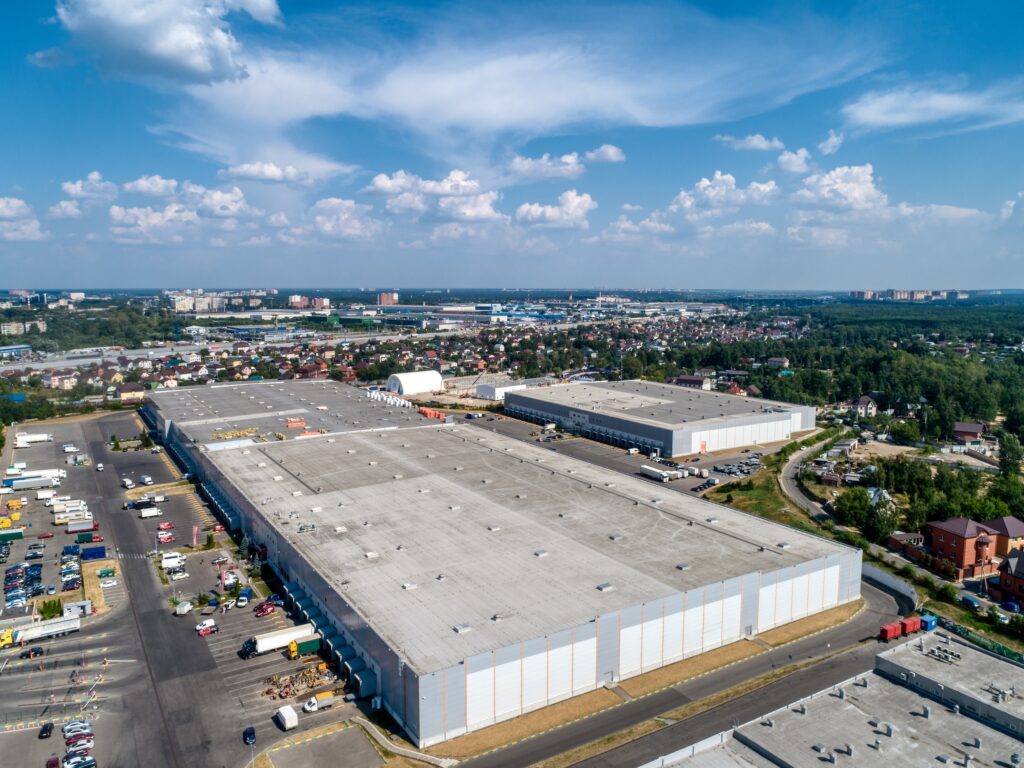
Warehouse and Distribution Center Roofing
Commercial roofing for warehouses, distribution centers, and industrial facilities throughout Tampa, FL. TPO, EPDM, and metal roof systems.
Amazon's massive TPA4 fulfillment center in Ruskin and the series of large distribution campuses along the I-75 and I-4 corridors serving the Tampa Bay region - including major Walmart, Target, and specialty logistics operations in Hillsborough and Pasco counties - represent one of the most active industrial roofing markets in the Southeast. Tampa Bay's position as a major port and its explosive population growth have driven warehouse construction at a pace that has strained both the local contractor base and the building department's plan review capacity. Getting a roofing project done right in this market requires a contractor who knows how to navigate the system efficiently.
Hillsborough County's Florida Building Code wind zone requires design wind speeds of 130 to 145 mph depending on the building's distance from the coast. All roofing systems must carry current Florida Product Approval numbers rated to the applicable design wind speed. The Tampa Bay area received a stark reminder of its hurricane vulnerability when Hurricane Ian skirted the metro in 2022 en route to Fort Myers - the storm surge and wind loads that hit the more directly impacted areas to the south demonstrated the value of properly engineered roofing systems. Fully adhered TPO is the dominant specification in Tampa's Class A industrial market, with mechanically attached systems reserved for projects where budget constraints or existing deck conditions require them.
Tampa's rainfall averages 46 inches annually, heavily concentrated in the June through September wet season when afternoon thunderstorms deliver one to two inches in 30 minutes on a regular basis. The intensity of these storms - which are among the highest rainfall-intensity events in the continental United States - demands drain systems sized conservatively. We use NOAA Atlas 14 intensity data for the Tampa area and size primary drains to the 10-year storm and overflow scuppers to the 100-year storm, which in Tampa's case produces primary drain sizes 20 to 30 percent larger than older facilities typically have. Upgrading drain body sizes at re-roof time is a standard recommendation on Tampa warehouses built before 2005.
TPO 60-mil and 80-mil are the workhorses of Tampa's warehouse roofing market. White TPO's Solar Reflectance Index of 100 or higher reduces peak roof surface temperatures from 170°F to 110°F in Tampa's August sun, which directly reduces the cooling load in warehouse spaces. Many Tampa-area distribution facilities run refrigerated trailers plugged in at the dock 24 hours per day, and the roof over the refrigerated dock area is an especially important location for high-performance reflective membrane. We specify 80-mil TPO at all refrigerated dock areas as a standard upgrade, because the higher membrane mass reduces the heat transmission through the assembly at locations where peak thermal load is highest.
Hurricane preparedness for a Tampa warehouse extends beyond the roof membrane itself. Edge metal and coping on parapet walls are the most common failure point in high-wind events - coping that is set on butyl tape without a continuous concealed cleat will lift and peel under sustained 100-mph wind even if the membrane itself stays in place. We install continuous aluminum or galvanized steel cleats under all coping caps, mechanically fasten the cleat to the substrate at six-inch intervals, and use sealant as a secondary measure at the coping end laps. Equipment curbs are strapped to the structural deck with hurricane ties in addition to the standard adhesive or mechanical attachment, a detail that adds hours to the installation but that prevents the uncontrolled deck opening that occurs when a curb fails in a storm.
Dock penetration flashing on a Tampa Bay area fulfillment center must accommodate not only the standard conduit and fire suppression penetrations but the increasingly common EV charging infrastructure that is being added to Tampa-area facilities as the logistics industry electrifies its last-mile fleet. High-voltage conduit runs from roof-mounted solar systems and from utility metering to charging stations can be large - four-inch or six-inch conduit bundles - and require sleeve flashings designed for their size. We stay current on the NEC requirements for rooftop conduit routing and coordinate the flashing design with the electrical contractor before work begins.
Forklift exhaust in Tampa's hot climate creates a higher concentration of combustion byproducts near the roof line than in cooler climates because natural stack effect - the buoyancy of warm exhaust air - is reduced when ambient temperatures are already in the 90s. Power exhaust ventilators with properly sized ridge curbs are standard on Tampa fulfillment centers, and we size those curbs for the actual ventilator CFM rating rather than using a generic curb size. Inadequately sized curbs that restrict airflow cause back-pressure that reduces ventilator effectiveness, which in turn raises internal CO levels near the dock area.
The Tampa Bay construction market's high demand environment means that lead times for roofing materials - particularly 80-mil TPO in the widths and lengths needed for large footprints - can run four to six weeks during peak construction season. We order materials for Tampa warehouse projects twelve to sixteen weeks before the scheduled start date and maintain a local staging area where materials can be received and held without incurring project demurrage costs. Owners who sign a contract in July hoping to start work in September should confirm that their contractor has placed the material order before they commit to the schedule.
Long-term performance in Tampa's coastal Florida environment requires attention to all penetration sealants on a two-year recoat cycle. Silicone sealants at metal-to-membrane joints, urethane sealants at penetration annular spaces, and elastomeric coatings at any areas of membrane lapping or termination all degrade faster in Tampa's UV intensity and heat than in northern climates. A biennial sealant inspection and recoat program adds a modest annual cost but extends the effective service life of the penetration flashings by five to eight years, which is significant on a 20-year warranty system in a market where a full re-roof costs $1.50 to $2.50 per square foot of roof area.
Frequently asked questions
How do I know if my Tampa commercial building's BUR system needs replacement or repair?
Roof review
Get a written Tampa Bay commercial roof scope.
We document the roof condition, separate urgent repairs from capital work, and give ownership a practical path before money gets spent.