
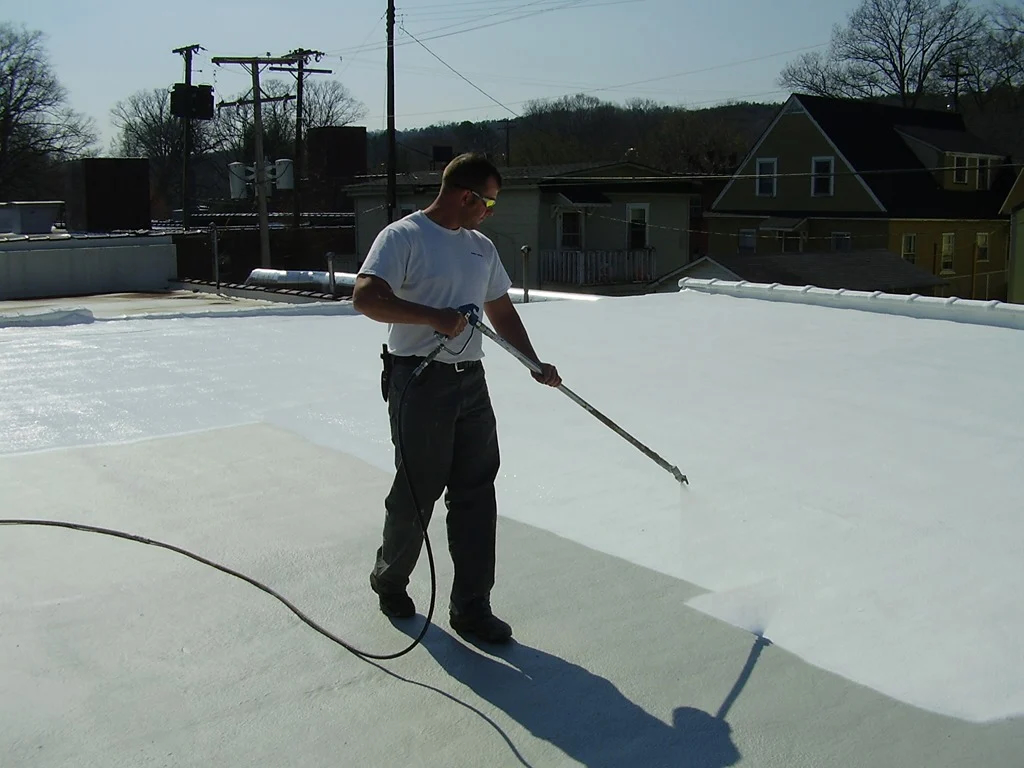
Spray Polyurethane Foam Roofing Tampa Bay
Spray polyurethane foam roofing for Tampa Bay commercial buildings - self-draining slope correction, high R-value insulation, silicone topcoat for UV protection, FBC HVHZ compliance, and complex geometry applications.
Spray polyurethane foam is a specialized commercial roof system that fills a specific role in the Tampa Bay market: buildings with chronic drainage problems that cannot be solved with conventional drain additions, complex geometry that precludes standard membrane installation, or existing roofs where slope correction and insulation upgrade in a single application are priorities.
Spray polyurethane foam roofing - a two-component isocyanate and polyol mixture that expands on contact with the roof substrate to form a seamless, self-adhering insulation and weather barrier - is not the right system for every Tampa Bay commercial building. It is the right system for a specific set of problems that other systems address less effectively: chronic low-spot ponding on flat roofs where drain additions cannot solve the drainage geometry, parapet-surrounded roofs where slope correction with tapered insulation would require extreme insulation thickness at the high points, and complex-geometry roofs with pipes, curbs, and penetrations where a seamless system that self-flashes around penetrations simplifies the scope.
In Tampa Bay's subtropical climate, the performance characteristics of SPF that matter most are its closed-cell moisture resistance and its seamless installation. Tampa Bay's rainfall volume - 47 inches annually, concentrated in daily afternoon thunderstorm events from June through September - creates sustained water contact on flat roofs. SPF's closed-cell foam structure does not absorb water in the way open-cell foam or glass-fiber insulation does. A properly installed and coated SPF system maintains its R-value and structural integrity under sustained water contact that would saturate conventional insulation in the same exposure.
The seamless characteristic of SPF eliminates the seam and lap that are the primary failure points of every other commercial roof system in the Tampa Bay storm environment. Hurricane wind-uplift failure in single-ply systems initiates at seams and edges. There are no seams in SPF - the foam self-adheres to the substrate and bonds to itself at every joint. The primary protection required for SPF in Tampa Bay is the topcoat that shields the UV-sensitive foam from direct sunlight, which degrades uncoated foam quickly under Tampa Bay's solar load.
SPF for Slope Correction and Drainage on Tampa Bay Flat Roofs
Tampa Bay's high rainfall volume makes flat-roof drainage performance a more urgent issue than in most inland markets. A flat roof in Houston might hold standing water for 24 to 36 hours after a moderate rain event without significant consequence. The same roof in Tampa Bay goes through that same ponding cycle multiple times per week during the June through September thunderstorm season - 100 to 120 ponding events per year rather than 30 to 40. The accelerated ponding cycle stresses drain bodies, seams, and flashing terminations at a rate that directly shortens the operating life of the membrane.
SPF slope correction builds up the foam thickness at the low points - the ponding locations - to redirect drainage toward the existing drain locations without adding new penetrations through the deck. For a roof with a chronic ponding pattern centered away from the drain locations, SPF fill can correct the drainage geometry at a lower cost than adding drains or re-sloping the deck. The foam thickness at the filled low points adds R-value at those locations, which can bring the roof assembly above the ASHRAE 90.1 minimum for Climate Zone 2 in areas where the original insulation was thin.
For Tampa Bay buildings where the parapet height limits the maximum insulation thickness at the drain locations, SPF's ability to build slope without raising the roof field elevation is a practical advantage over tapered polyiso. A tapered polyiso system that builds 1/4-inch per foot slope across a 100-foot roof span adds 25 inches of insulation height at the high point - which may conflict with parapet height, HVAC curb heights, or equipment access. SPF builds the slope at the low points rather than raising the high points, keeping the roof field elevation and high-point components undisturbed.
UV Protection and Silicone Topcoat Requirements for SPF in Tampa Bay
Uncoated polyurethane foam degrades rapidly under direct UV exposure. In Tampa Bay's high-UV subtropical environment at 27 degrees north latitude, uncoated SPF would begin visible degradation within four to six weeks of exposure - the surface oxidizes from a closed-cell white to a yellow-brown friable layer that progressively loses structural integrity. The topcoat is not optional; it is the primary weather barrier for the foam substrate beneath it.
Silicone topcoat is the standard protective system for SPF in Tampa Bay. Silicone's UV resistance, ponding water resistance, and flexibility across Tampa Bay's temperature range make it the most durable option for the topcoat function. Acrylic topcoats are less expensive but degrade under the sustained ponding water exposure that Tampa Bay's drainage patterns produce - silicone's water resistance advantage is a genuine performance difference in this market, not a specification preference.
Silicone topcoat application for SPF requires the same wet film thickness discipline as standalone silicone coating restoration: minimum 20 mils dry film thickness for a ten-year warranty, measured and documented during application. The topcoat renewal schedule - typically every eight to twelve years, depending on the original topcoat thickness and UV exposure - is part of the maintenance contract for SPF systems. A topcoat that has eroded below the protective threshold is not a failing SPF system - it is a system that needs topcoat renewal, which is a fraction of the cost of full replacement.
Roof review
Get a written Tampa Bay commercial roof scope.
We document the roof condition, separate urgent repairs from capital work, and give ownership a practical path before money gets spent.