Standing-Seam Metal Roofing Tampa Bay
Standing-seam metal roofing for Tampa Bay commercial buildings - Kynar-finish coastal alloy specification, FBC HVHZ clip and fastener engineering, Miami-Dade NOA approval, hurricane wind-uplift panel attachment.
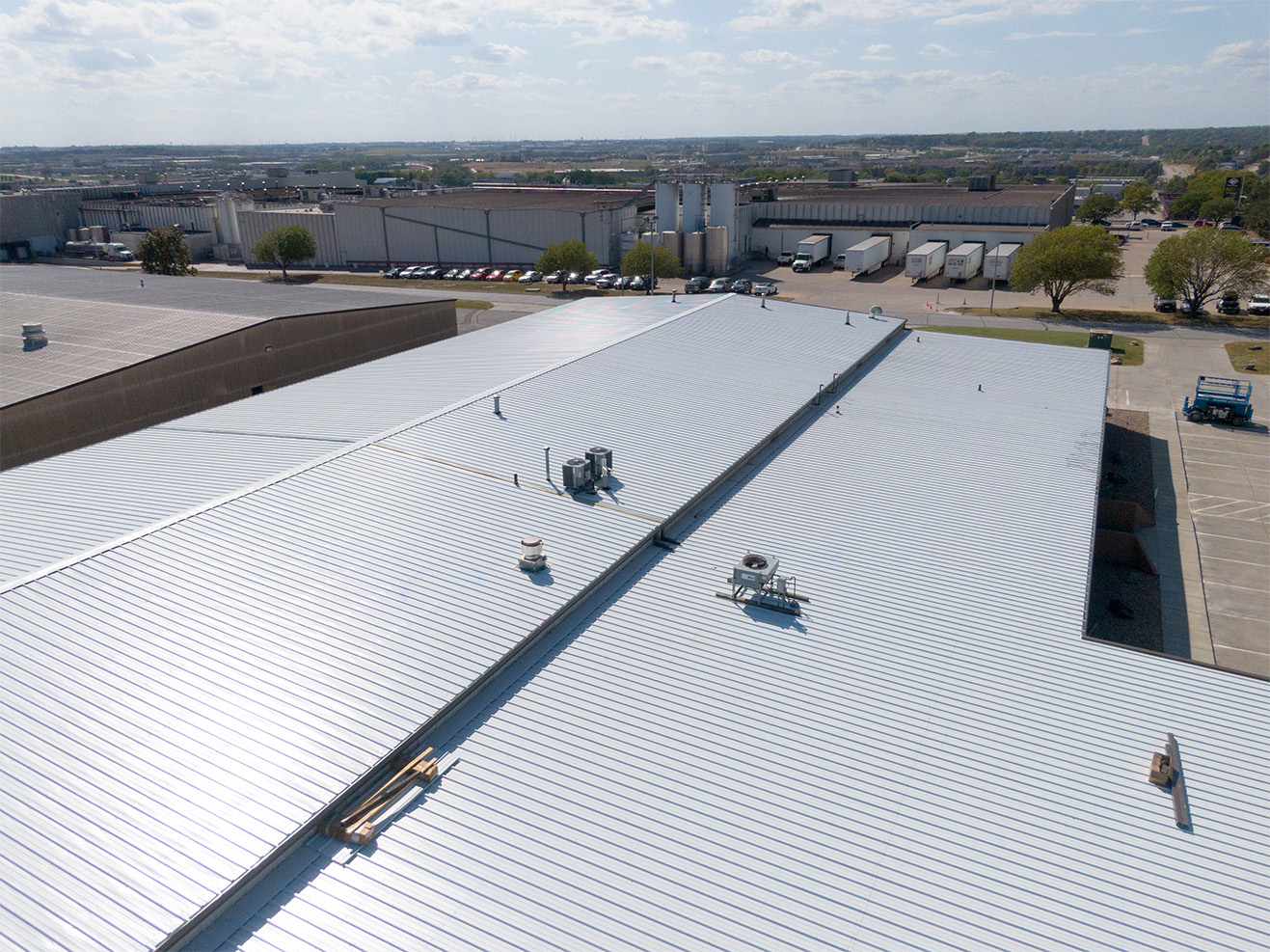
Standing-seam metal is a legitimate and durable commercial roof system for Tampa Bay buildings with sufficient slope - and a system where the coastal environment requirements and FBC HVHZ clip, fastener, and panel specifications diverge significantly from standard national practice. Coastal alloy selection, Kynar finish, and NOA-approved clip systems are the differences between a 40-year system and one that fails in the first hurricane season.
Standing-seam metal roofing on commercial buildings in the Tampa Bay coastal environment requires a materials and attachment specification that is substantially different from what is standard practice in inland markets. The combination of salt-air corrosion from Tampa Bay and Gulf proximity, the FBC HVHZ wind-uplift requirements for clip and fastener attachment, and the hurricane-season rain rate and thermal cycling of Tampa Bay's subtropical climate means that a standing-seam specification tailored to standard construction-grade Galvalume and a uniform clip pattern will underperform its design life in this market.
The buildings that carry standing-seam metal roofing in the Tampa Bay commercial inventory include the older Westshore Class A office buildings where standing-seam was specified as an architectural statement, the TIA terminal facilities where standing-seam is a practical choice for the sloped section roofs, the Port Tampa Bay cargo terminal roofs with steep-slope sections, and the growing population of suburban commercial and retail buildings where standing-seam provides a visual differentiation from the standard flat-roof inventory. Each of these building types has a different exposure profile and a different set of clip and panel requirements.
For Tampa Bay coastal buildings in the FBC HVHZ exposure zone, Miami-Dade NOA product approvals are required for standing-seam panel systems. The NOA covers the specific panel profile, the clip type and spacing, the fastener into the substrate, and the panel finish. Installing a panel system without the matching NOA approval for the clip configuration used - even if the panel itself has an NOA for a different clip configuration - means the assembly is out of code compliance and the warranty is void. We specify NOA-approved clip and panel combinations and document the NOA compliance in the project closeout package.
Coastal Alloy and Finish Selection for Tampa Bay Salt-Air
Standard Galvalume steel panel is the industry default for commercial standing-seam, and it performs well in inland markets. In the salt-air zone within two to three miles of Tampa Bay and the Gulf of Mexico, Galvalume's zinc-aluminum coating is attacked by chloride ion deposition at a rate that accelerates corrosion at cut edges, lap seams, and fastener penetrations significantly faster than the rated design life. Buildings within direct salt-air exposure of Tampa Bay or the Gulf should specify 5052 aluminum alloy panel - which does not corrode from salt-air chloride exposure - or a zinc panel with a marine-grade finish for coastal applications.
Panel finish matters equally. Standard polyester paint finishes chalked and faded on Tampa Bay coastal buildings within eight to ten years in the early standing-seam installations of the 1990s. Kynar 500 polyvinylidene fluoride finish is the correct specification for Tampa Bay coastal commercial standing-seam - it maintains color and gloss under Tampa Bay's intense UV load and resists salt-air chalking through 30-plus year service life with documented maintenance. Major panel manufacturers including Petersen PAC-CLAD, Fabral, and Metal Sales carry Kynar-finish panels in the alloy configurations appropriate for coastal exposure.
For buildings in direct Gulf or Tampa Bay waterfront exposure - Port Tampa Bay freight terminals, Channelside waterfront commercial buildings, the St. Pete Beach and Clearwater Beach commercial corridors - we specify 5052 aluminum with Kynar finish as the base specification and add a seam and clip stainless hardware package. Stainless standing-seam clips at the panel attachment points eliminate the primary galvanic corrosion risk between the panel and the clip in a salt-air environment.
FBC HVHZ Clip and Panel Engineering for Hurricane Wind-Uplift
Hurricane wind-uplift failure in commercial standing-seam roofing follows a specific pattern: panel uplift beginning at the ridge and eave clips where the design pressure is highest, progressing to clip pull-through or panel seam disengagement in the corner and perimeter zones. Hurricane Milton's 2024 track across Hillsborough County produced standing-seam panel damage concentrated in the perimeter and corner zones - consistent with the zone-differential design pressure pattern that FBC HVHZ provisions require to be addressed in clip spacing.
FBC HVHZ clip engineering for commercial standing-seam requires a zone map overlaid on the roof plan - field zone, perimeter zone, corner zone - with different clip spacings calculated for each zone. The field zone clip spacing that achieves the required field design pressure will not achieve the two to three times higher perimeter and corner design pressures. Tighter clip spacing at perimeter and corner zones - or a floating clip that allows thermal movement while maintaining positive engagement under uplift - is required to meet the HVHZ design pressures.
Miami-Dade NOA approval for commercial standing-seam panel systems lists the maximum allowable clip spacing for each roof zone at the tested design pressure. We match the specified clip spacing to the NOA-tested spacing at each zone - tighter at the perimeter, tightest at the corners - and document the zone map with clip spacing diagram in the project specification and closeout package. The closeout record is what the building owner has when the next storm event generates an insurance conversation.
Roof review
Get a written Tampa Bay commercial roof scope.
We document the roof condition, separate urgent repairs from capital work, and give ownership a practical path before money gets spent.